Every October, a wagon pulled by a tractor rattles a short stretch of Nod Road out to a pumpkin field, and every October, a new set of kids climbs off holding a cider donut and asking if they can come back next week. It is the kind of errand that barely registers as an errand. You know the farm. You know the field. What most people driving Nod Road do not know is how long that field has actually been a field.
The land under those pumpkins has been farmed, without interruption, since 1666. That is not a typo and not marketing shorthand. According to the Avon Historical Society, the ground now known as The Pickin' Patch was part of the Woodford family farm, in continuous operation since 1666, more than 160 years before Avon existed as its own town. This fall's hayride is running over some of the oldest working farmland in the Farmington Valley, and almost nobody standing in line for cider knows it.
The Family That Farmed It Before Avon Was Avon
The Woodfords are not a footnote in this story. They are the story.
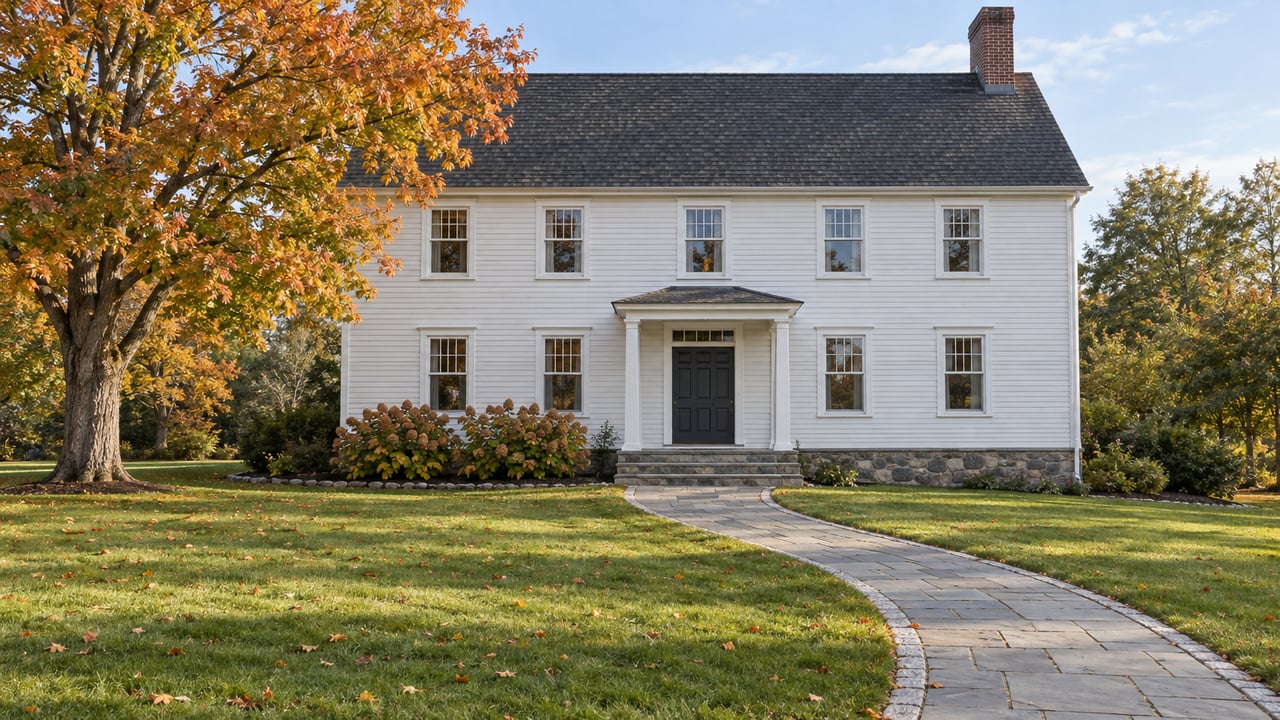
Amasa Woodford, who owned a house on this same stretch of Nod Road in the 1830s, was part of the movement that split Avon off from Farmington as its own town in 1830. A generation later, Chester Randolph Woodford built a farmhouse at 215 Nod Road around 1850 and spent his life working the land as a dairy and tobacco farmer. He lived to 107. According to the Avon Historical Society, Woodford was the first farmer in Avon to grow tobacco, starting with broadleaf for cigar wrappers before he and his son Prescott began growing shade tobacco in 1905. That crop stayed in the family's rotation into the 1980s.
When the tobacco era ended, the farm did not go fallow. It pivoted to vegetables and berries and became what locals now call The Pickin' Patch, on Nod Road. The historical society notes that the property still has a number of historic tobacco sheds standing, physical evidence of a century-old cash crop sitting a few rows away from this year's pumpkin patch. Drive past slowly enough and you can still pick them out.
This is the part of Avon's story that does not show up on a real estate listing or a town brochure. It is not a school rating or a zoning map. It is a single continuous chain of ownership and cultivation stretching back to before the town had a name, and it happens to end at the same field where your kids will pick a pumpkin this month.
What's Actually Running This October
The present-day operation is straightforward and worth knowing in practical terms. The Pickin' Patch, at 219 Nod Road, offers pick-your-own vegetables and small fruits in season, annual and perennial flowers, and festive fall decorations, and it runs free hayrides out to the pumpkin field throughout October. It is regularly listed among Connecticut's oldest continually operating farms, which tracks given the Woodford timeline behind it.
A few things worth knowing before you go:
- The hayride is specifically an October offering, not a year-round attraction. Earlier in the season the farm's focus shifts to pre-started flower and vegetable plants in spring and pick-your-own small fruits and vegetables in summer.
- Crop timing shifts with weather. A wet or dry stretch can move picking windows earlier or later than the calendar suggests, so it is worth checking the farm's Facebook page before making the trip a special occasion.
- This is a working farm, not a staged attraction. The tobacco sheds, the farm stand, and the pumpkin rows are all part of the same operating parcel that has been in continuous use since the 17th century, which is part of what makes it feel different from a seasonal pop-up.
Getting There Without Ever Touching Route 44
Here is the part most residents have not connected yet. The same fall that makes the Woodford farm's history worth knowing is also the best time of year to reach it on foot or by bike instead of by car, because Avon's trail network solved a problem that used to make that trip harder than it needed to be.
The Farmington Valley Greenway, built on an old Boston and Maine rail bed, runs the length of Avon from the Simsbury town line to the Farmington town line and is open dawn to dusk year round, though it is not plowed in winter. That last detail matters less right now. What matters this month is that the trail is paved, flat, and fully usable, and that the Farmington Valley Trails Council has spent years closing the gaps and adding infrastructure that make the Nod Road corridor easier to reach without a car.
Chief among those improvements: a tunnel built beneath Route 44 in Avon, mentioned in the trail council's own newsletters as one of the town's key upgrades to the greenway system. Route 44 is Avon's busiest east-west corridor, and crossing it at street level during peak fall traffic, with a wagon-load of pumpkins in tow, is not most people's idea of a relaxing Saturday. The underpass removes that problem entirely. From the Sperry Park trailhead on Fisher Drive, off Mountain View Avenue, you can pick up the greenway and reach the Nod Road area without waiting for a light or dodging a turn lane.
Two Timelines, One Road
This is where the two facts meet. Nod Road carries two clocks that most residents experience separately without ever noticing they overlap. One clock started in 1666 and has been running, crop after crop, family generation after family generation, longer than Avon has been a town. The other clock started much more recently, as trail advocates worked year over year to pave, connect, and tunnel their way toward a greenway that finally lets you reach that same farmland without a car.
Knowing both changes how the errand feels. The hayride is not just a seasonal activity you do because your kids ask for it. It is a short visit to the oldest continuously worked ground in town, made easier this year by decades of quiet trail investment that finally removed the one obstacle, Route 44, that used to stand between downtown Avon and its own farmland.
Planning the Actual Trip
If you want to do this right in October, the logistics are simple. Confirm the farm is open and picking before you go, since crop timing shifts with the season. If you are driving, Nod Road is straightforward. If you would rather walk or bike, start at the Sperry Park trailhead on Fisher Drive and follow the greenway north, using the Route 44 tunnel to avoid the corridor's traffic entirely. Either way, budget time to actually look at the property once you arrive. The tobacco sheds are still standing. The farmhouse history is documented by the Avon Historical Society, whose Marion M. Hunter History Room at the Avon Public Library keeps files on properties like this one for anyone who wants to go deeper.
Most people will never do that research. They will climb off the wagon, hand over a few dollars for a pumpkin, and drive home. That is fine. But if you live here, it is worth knowing that the ground under your feet during that ten-minute stop has been producing something, tobacco, vegetables, pumpkins, for longer than the town around it has existed.
That is the kind of detail that does not change your Saturday plans. It just makes the drive down Nod Road a little harder to take for granted.
If you are the type of Avon resident who likes knowing the history behind the routines, you probably already have a running list of other spots like this one. The Lisa Sweeney Team has spent decades working these same back roads, from Nod Road to the Farmington Valley Greenway, and we are always glad to talk through what makes a particular corner of Avon, Farmington, or Simsbury worth knowing, whether or not a move is anywhere on your horizon. If one ever is, request a confidential consultation and we will bring the same local detail to that conversation.