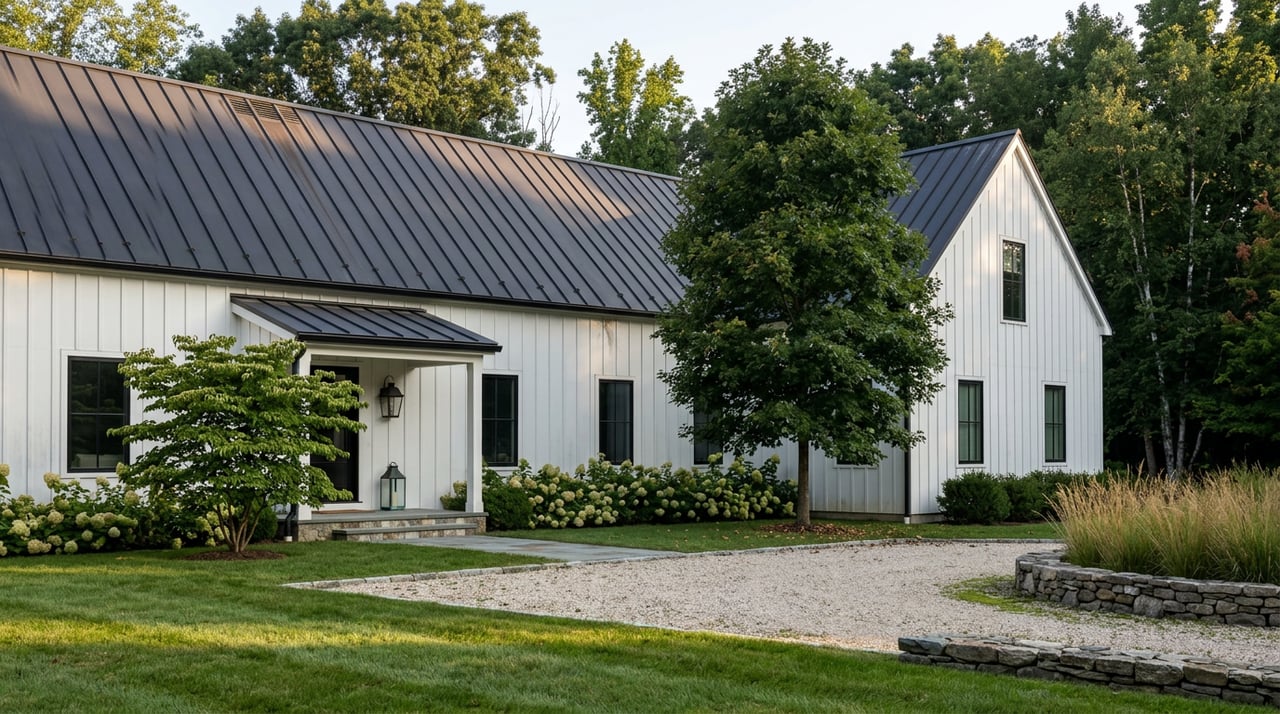
Two building lots go up for sale in Avon within a few weeks of each other. Both are wooded, both back up to open space, both are priced in the same range. One lot's listing sheet says the septic design is already approved and the well is sited. The other says public sewer is available at the street. Most buyers read that second line as the win. It sounds finished. It sounds like less work.
It might be the opposite.
Avon is one of the few towns in the Farmington Valley where "town sewer" doesn't mean what it means everywhere else, because Avon doesn't have its own sewer treatment plant. The town's sanitary collection system moves wastewater through more than 90 miles of piping and four town-owned pump stations, but the actual treatment happens under contract with Farmington, Simsbury, and Canton. Avon is, in effect, a customer of its neighbors' plants. That single fact changes how a buyer should think about what "on sewer" is actually worth on a specific parcel, and it's the piece almost nobody raises before an offer goes in on raw land here.
Why The Two Systems Aren't A Simple Upgrade And Downgrade
The instinct is to treat public sewer as the modern option and septic as the fallback for lots the system hasn't reached yet. Avon's own subdivision rules don't frame it that way. The town's design standards require a proposed subdivision to connect to public sewer where it's reasonably accessible. Where it isn't, and isn't expected to become available within a reasonable window, individual septic systems are allowed instead, subject to approval from the Avon Director of Health and compliance with the State Health Code for wells and subsurface disposal.
That's a permitting decision, not a value judgment. A lot on West Avon Road or up toward Avon Mountain that's zoned for septic isn't a consolation prize. It's often exactly the kind of large, private, well-treed parcel that draws the buyer looking for an equestrian setup or a custom build away from closer-set neighborhoods. Septic and well infrastructure is a normal, expected condition of that kind of land, not a compromise on it.
What Each Path Actually Requires Before You Can Build
| Public sewer connection | Private well and septic | |
|---|---|---|
| Who signs off | Avon Water Pollution Control Authority (WPCA) | Avon Director of Health, per State Health Code |
| What gets tested | Line capacity and connection specs | Soil and percolation testing on the specific lot |
| Upfront cost structure | Ask the WPCA about applicable charges | Design, testing, and installation, paid once to a licensed contractor |
| Typical driver of delay | WPCA scheduling and inter-town treatment capacity | Weather-dependent soil testing and health department review |
Neither path is fast by default. Septic approval hinges on soil conditions that can only be tested when the ground isn't frozen or saturated, which is part of why builders in this market plan site work around the calendar rather than around the buyer's closing date. Sewer connection depends on the WPCA's own process, and because Avon is buying treatment capacity from three other towns rather than running its own plant, extending or upgrading a line isn't purely a local decision.
The Charge That Doesn't Show Up At The Open House
Here's the part that changes the math on the "sewer lot looks better" instinct. Connecticut General Statutes § 7-249 gives water pollution control authorities the power to levy benefit assessments on properties that gain value from a sewer system, whether or not the property directly abuts the line. These assessments can be spread out through installment payments.
In plain terms: a lot that's sewer-connected may be carrying a ongoing financial obligation to the town that has nothing to do with the purchase price and won't necessarily show up unless someone specifically checks for it. A septic system, once it's designed, tested, and installed to code, is simply the buyer's asset. The system that looks more finished on paper can be the one with a longer financial tail.
This is the question worth asking before falling for a lot, not after signing a purchase agreement: is there an existing benefit assessment recorded against this parcel, and if the lot is unimproved, what would a new sewer connection charge look like today versus the cost of a septic design built for this specific soil.
What This Means If You're Evaluating Raw Land Or A Teardown
For a buyer planning a custom build in Avon, this isn't an abstract distinction. It determines your timeline, your upfront cash needs, and whether you're buying into an ongoing municipal charge on top of your mortgage. A few practical habits are worth building into the process:
- Ask directly whether the parcel is inside Avon's public sewer service area or relies on individual septic, and get it in writing rather than assuming from the neighborhood.
- If septic is required, ask whether percolation testing has already been completed and approved by the Avon Director of Health, since untested soil is a real source of delay on a build schedule.
- If sewer is available, ask the WPCA whether a benefit assessment is already attached to the property or would be triggered by new construction, since that changes the real cost of "being on sewer" beyond any applicable WPCA charges.
- Treat both systems as legitimate, permanent solutions rather than one being a placeholder for the other. Plenty of Avon's most private, larger-acreage properties, the kind suited to equestrian use or a quiet custom build, were designed around septic from the start and were never meant to connect to town sewer.
None of this shows up in a listing photo. It shows up in the town's own subdivision file for that lot, and in the WPCA's records, both of which are worth pulling before the due diligence period runs out.
A Few Direct Questions
Does a septic system lower what a home is worth in Avon? Not inherently. A properly designed and approved septic system on a large, private lot is standard in parts of Avon and isn't treated as a defect. What matters is whether the system was designed and tested to code for that specific soil, not whether it's septic instead of sewer.
Can a septic lot connect to town sewer later if the line gets closer? Avon's own subdivision standards anticipate this in some cases, requiring stub-outs when public sewer is expected within a reasonable timeframe. Whether it's realistic for a specific parcel depends on the WPCA's plans for that area, which is worth asking about directly rather than assuming.
Who actually approves a new well or septic system in Avon? The Avon Director of Health approves individual well and septic installations, based on standards set by the State Health Code. This is a separate approval from anything handled by the WPCA, which governs the public sewer system.
Buying land in Avon, especially the kind of larger, private parcel suited to a custom build or an equestrian setup, means reading past the listing sheet and into the town's own permitting file. That's exactly the kind of groundwork Lisa Sweeney Team walks clients through before an offer goes in, not after. If you're evaluating a building lot or a teardown anywhere in the Farmington Valley, request a confidential consultation and we'll help you see what the parcel actually requires before you commit to it.
This article is general information, not legal, tax or financial advice. Consult a qualified professional about your situation.